Stochastic Sequencers: Probability-Based Melody Generation
What Is a Stochastic Sequencer and How Does It Work?
Stochastic Sequencers: Probability-Based Melody Generation
Stochastic sequencers take the idea of adjustable randomness significantly further than ordinary random trigger sequencers.
Instead of influencing only rhythm, they can introduce probability into both pitch and sequence behaviour.
Two Types of Randomness
According to the book, stochastic sequencers typically offer:
randomness of pitch,
- randomness of step progression.
These two dimensions can be controlled independently.
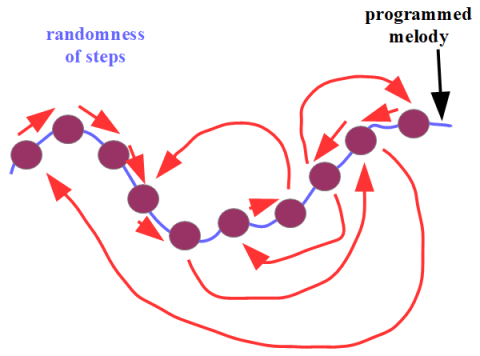
Step Randomness
Many stochastic sequencers provide several predefined behaviours:
random direction changes,
skipping steps,
- combinations of both.
The melody itself may remain unchanged while the route through the melody varies.
Pitch Randomness
Pitch randomness works differently.
The user defines a range of possible deviations.
Small ranges preserve the original melody.
Larger ranges gradually transform it.
Source and Target
An important insight from the book is that stochastic sequencers are both sources and targets of randomness.
External modulation can continuously reshape their behaviour.
Conclusion
Stochastic sequencers blur the distinction between composition and generation. They allow melodies to evolve probabilistically while preserving recognisable musical identity.
Just click here to get more details about this topic, including graphs, presets, patches and videos.