Wave Shape Modulation for Evolving Generative Patterns
How Does Wave Shape Modulation Affect Generative Music?
Wave Shape Modulation for Evolving Generative Patterns
Many musicians think about modulation primarily in terms of frequency and amplitude.
Yet another parameter deserves attention: waveform shape.
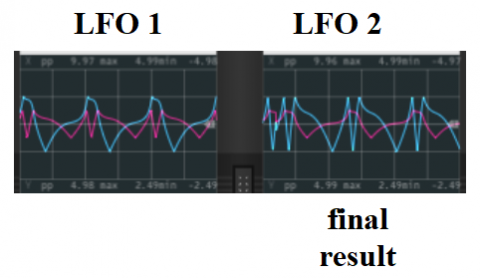
Changing the shape of an LFO can dramatically alter the behaviour of an entire generative system.
Why Shape Matters
A sine wave creates smooth movement.
A triangle wave produces linear transitions.
A square wave creates abrupt changes.
Each waveform generates a distinct musical character.
The source material highlights wave-shape modulation as an effective method for increasing variation within LFO-based generative systems.
Beyond Static Shapes
Many modern modules allow continuous transformation between waveforms.
A sine wave can gradually become a triangle.
A triangle can evolve toward a square.
This means the modulation source itself is constantly changing.
Musical Consequences
Wave-shape modulation can influence:
melodic contour,
rhythmic behaviour,
filter movement,
- timbral evolution.
The resulting changes often feel more natural than simply increasing modulation depth.
Long-Term Development
Slow wave-shape modulation is particularly useful.
The listener may not consciously notice the transformation.
Yet the overall character of the patch gradually evolves.
This contributes to the impression of an organic musical process.
A Powerful Yet Underused Technique
Compared to random generators or sequencers, wave-shape modulation receives relatively little attention.
Nevertheless, it is one of the most effective methods for extending the life of a generative patch.
Click here to get even deeper insights about this topic, including graphics, patches and video.