Creative Comparator Techniques for Generative Modular Patches
How Can Comparators Be Used Beyond Simple Voltage Comparison?
Creative Comparator Techniques for Generative Modular Patches
Comparators are among the most versatile utility modules in modular synthesis.
Although their primary task is simple, comparing voltage levels, their creative applications extend far beyond basic switching.
The Basic Principle
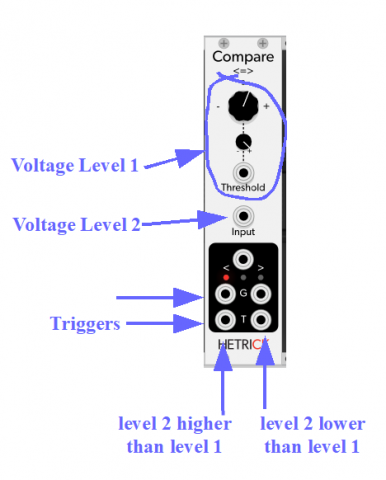
A comparator compares two voltages.
When one voltage exceeds the other, the module changes state.
Depending on the design, it may generate:
gates,
triggers,
switching signals,
- multiple outputs.
Modulating the Threshold
The most obvious extension is making the comparison threshold dynamic.
Instead of using a fixed value, a modulation source changes the threshold continuously.
The comparator then reacts differently over time.
Comparator as Logic Processor
A comparator can also function as a logic element.
Different voltage levels can represent logical states.
This allows complex interactions between modulation sources.
Waveform Transformation
Any waveform can be converted into a square-like signal by selecting an appropriate threshold.
This creates new rhythmic and timbral possibilities.
Audio Processing Applications
The chapter also highlights unusual applications such as:
bit-crushing style effects,
waveform reshaping,
- grain-like switching between audio sources.
Conclusion
Comparators are powerful creative tools. Their ability to transform, interpret, and react to voltage relationships makes them valuable building blocks in generative patch design.
Just click here to get more details about this topic, including graphs, presets, patches and videos.